

Our YES is just as radical as our NO.
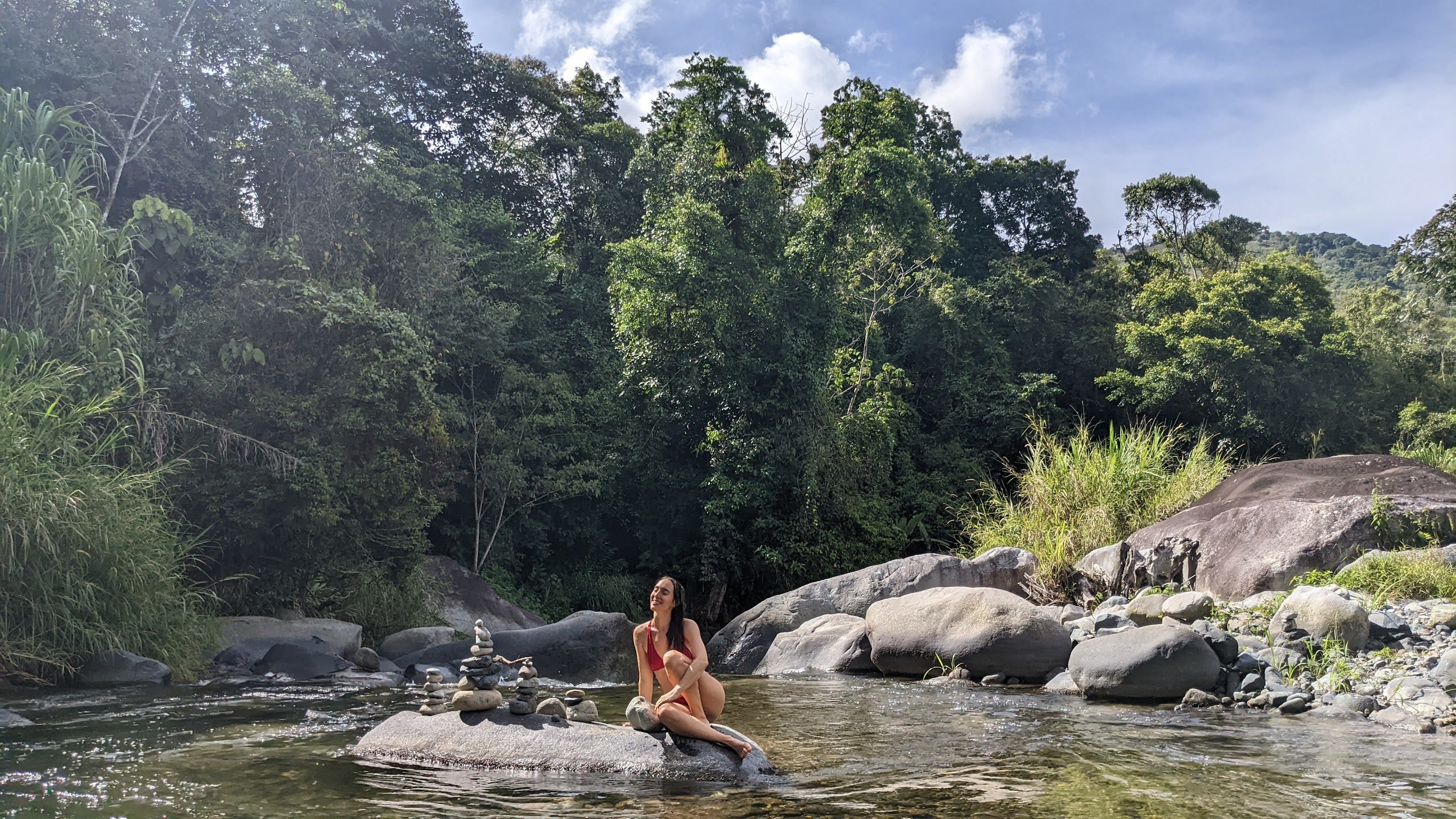
Skin cringing back from an unwanted massage. Surprised jaw locked against a non-consensual kiss. Arms crossed over chest—unsolicited compliment. Fake smile, fake laugh, fake interest, fake orgasm. Most women will know what it feels like to feign pleasure for fear of: reprimand, retribution, attack, anger. I know I have.
Worse, I have doubted my own body’s voice telling me what does and does not feel good because someone (or society) told me what I should and should not like. Surely we have all, at one time or many, adjusted our tastes—likes, dislikes, ‘guilty’ pleasures, professed preferences—to please, to fit in, or to cede to someone else, someone we care for.
As a holistic self-defense instructor and a loud advocate for women’s autonomy, I get asked very often what happened to me to make me care so much. Unlike one third of women around the world (or perhaps many more), I have not experienced direct sexual violence. However, I am familiar with the slower and more subtle ways in which people, media, and culture can erode our confidence in ourselves, trust in our intuition, and connection to our true pleasure.
I facilitate workshops where women can practice yelling, “no,” role-play boundary setting, and learn a solid palm heel strike in a safe and healing space. But I also try to leave time to yell, “yes,” to embody pleasure and connection, and to remember what our inner voice sounds like when she whispers, “yes,” “no,” or, “I don’t know yet.”
Because I believe that for women who have historically been silenced, punished, and minimized in both our pleasure and our pain, our “yes” and our “no” can be equally radical.
As an Empowerment Self-Defense (ESD) instructor, I define both violence and self-defense along a broad spectrum. An attack by a stranger in the street or on the beach is violence. Emotional abuse is violence. Street harassment is violence. As a general rule, we humans don’t learn basic skills for defending ourselves anywhere along this spectrum.
The empowerment self-defense methodology provides choices and practical strategies—both verbal and physical—for dealing with risk, danger, or simple discomfort in ways that support safety and agency. At its best, I think it can also improve our day-to-day interactions with family, friends, and partners by helping us dial into our needs, desires and boundaries, hone our intuition, and speak from it with confidence and power.
In ESD, we like to use the metaphor of a traffic light to understand boundaries and risk:
When we are in green, everything is okay, normal, calm. The body should be relaxed, without too much tension, the breath even, and the heart rate at a natural resting rhythm. An intimate relationship, friendship, or work environment should feel green most of the time, for most of us. This is a healthy place for our nervous systems, a place where healing and learning can occur, because the heart and mind are open to receive and connect.
When we are in yellow, we are on higher alert. We notice that something isn’t right, we feel uncomfortable, or someone is crossing a personal boundary. The body may become more tense, the heart rate or breath might accelerate, and our posture and body language display more awareness.
And finally, when we are in red, we are already in danger, and we need to apply self-defense principles (Think, Yell, Run, Fight, or Tell/Seek Support) in order to stay safe.
It is critical to understand that (holistic) self-defense does not begin when we are in red. Self-defense begins when we are in green, with a continual process of self-discovery and exploration. It starts with knowing our boundaries, understanding what we like and want, and getting clear about which behaviors we will not allow.
Encuentra tu no, vive tu sí. “Find your no, live your yes.”
The motto for my social enterprise, Mujeres Fuertes Autodefensa (Strong Women Self-Defense), reflects my belief that the path to healing (through holistic self defense) must include self-discovery, pleasure, vulnerability and connection, as well as boundaries, strength, and self-reliance.
Just like identifying the “red” requires that we understand the “green”, our boundaries make more sense in contrast to our desires.
I am learning, slowly, to give voice to my boundaries and my desires—without fear, shame, or belittlement. I am becoming more comfortable honoring my body’s whispers, even when the outside noise nearly drowns her out. I am beginning to forgive myself for the times I did not do so.
Along the many twining paths of my travel, work, and studies, I have sought connection and pleasure, but I did not always know how to distinguish between what came from inside me, and what had—intentionally or unconsciously—been forced in from the outside.
The tools I practice and teach have helped me and thousands of participants to listen more carefully to ourselves, choose how to proceed with intention and power, and finally, to embrace our autonomy along the whole spectrum—from no to yes.
It is my wish that we may all truly say “yes” to pleasure, with a strong back and a whole heart.
Originally published at WOWZINE.
More on this:

Every Day is a Good Day to Fight for Women’s Rights

This year, as I have done almost every year since becoming an Empowerment Self-Defense instructor 8 years ago, I "celebrated" International Women’s Day (March 8th) with self-defense workshops. So did several of the instructors I trained. The month began with a screening of my documentary,
The Witch & the Warrior: The "Dark" Archetypes & Empowerment Self-Defense

In an introductory empowerment self-defense workshop, I don’t have time to talk about some of the deeper themes connected to this work. There are already so many decisions to make about what to include and what to leave out in order to create a complete experience in just two or three hours.